Harry’s New York Bar at 5 Rue Daunou in Paris is one of the most famous bars in the world. It’s a dark wood room with college pennants on the walls, and it has claimed credit for several famous drinks, including the Bloody Mary, the Sidecar and the French 75. Some of those claims hold up better than others.
The Bar
The bar opened on Thanksgiving Day 1911 as the New York Bar. The story is that an American jockey had a bar in Manhattan dismantled, shipped to Paris and reassembled. In 1923, Scottish bartender Harry MacElhone bought it and renamed it Harry’s New York Bar. During the 1920s, it was a hangout for American expatriates, writers and journalists. To this day, the bar tells English speakers to give taxi drivers the address as ‘Sank Roo Doe Noo.‘
The French 75: What We Know
The French 75 is named after the French 75mm field gun of World War I. The story you’ll often hear is that MacElhone made it at Harry’s around 1915. The real history is more complicated.
- 1915–1916: Paris newspapers mention a drink called the ‘Soixante-Quinze’ (seventy-five), linked to Ciro’s, a Paris bar where MacElhone worked. Its recipe isn’t clear.
- 1922: MacElhone’s book Harry’s ABC of Mixing Cocktails prints a ‘75’ cocktail — but it’s Calvados, gin, grenadine and absinthe. No Champagne, no lemon.
- 1927: The gin, lemon, sugar and Champagne recipe called the ‘French 75’ appears in Here’s How by Judge Jr.
- 1930: The Savoy Cocktail Book by Harry Craddock in London prints the same recipe, making it famous.
So MacElhone and Harry’s are an important part of the story, but the modern French 75 can’t be traced to the bar with any certainty. Harry’s still serves it, and it’s a fine place to drink one.
What Makes a Good French 75
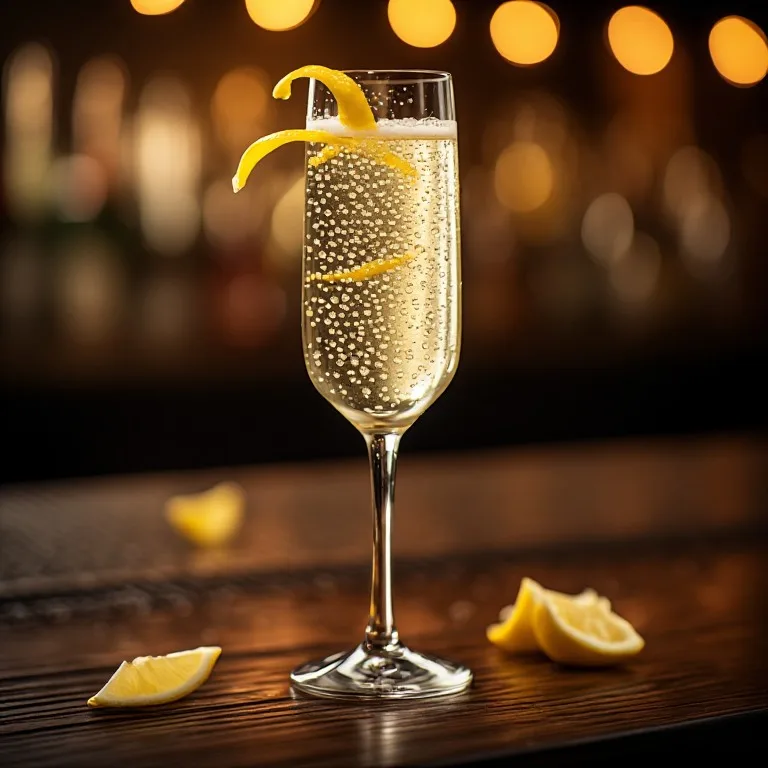
The drink is a gin sour topped with Champagne. Gin, lemon and sugar are shaken and strained into a flute, then topped with sparkling wine. It’s bright, crisp and slightly sweet, with juniper and lemon on the nose.
Why Home Versions Miss
- Too much sugar. Champagne already has some sweetness. Keep the syrup to half an ounce.
- Sweet sparkling wine. Asti or sweet Prosecco makes it cloying. Use brut.
- Stirring after topping. You’ll lose the bubbles. Pour the wine slowly and let it mix itself.
- Bottled lemon juice. It tastes dull and bitter. Squeeze fresh.
The Key Technique: Shake Then Top
Shake only the gin, lemon and sugar. Never put sparkling wine in a shaker — it will foam everywhere. Strain the shaken mix into a chilled flute, then tilt the glass and pour the Champagne slowly down the side. Finish with a long lemon twist.
For a Party
The French 75 is a great party drink because the base batches easily. Mix the gin, lemon and syrup in a bottle and refrigerate it. When it’s time to serve, pour two ounces into each flute and top with Champagne. One bottle of Champagne makes about eight drinks.
The Mocktail: Seventy-Zero
Use a botanical zero-proof gin alternative and a dry non-alcoholic sparkling wine. Sparkling grape juice is too sweet and turns the drink into lemonade. Cut the syrup slightly, since NA sparkling wines tend to be a little sweeter than brut Champagne.
Gin Choices
Most London dry gins work well in a French 75. Juniper-forward gins like Tanqueray and Beefeater give a classic, crisp drink. Citrus-heavy gins like Tanqueray No. Ten or Malfy work nicely with the lemon. Floral gins like Hendrick’s make a softer drink.
Plymouth gin, which is slightly earthier and softer, is a favorite of many bartenders for this drink.
Enjoy responsibly — must be 21+.